People Skills for Supervisors
PARTICIPATIVE DESIGNS INC.
SUPERVISOR PROGRAMS FOR THE GTA & SOUTHWESTERN ONTARIO
The real test of supervisor training is what happens back on the plant floor.
Six sessions. Three months. Real challenges. Practice and coaching between sessions.
People Skills for Supervisors is an on-site development program built around applying new skills, not just learning them.
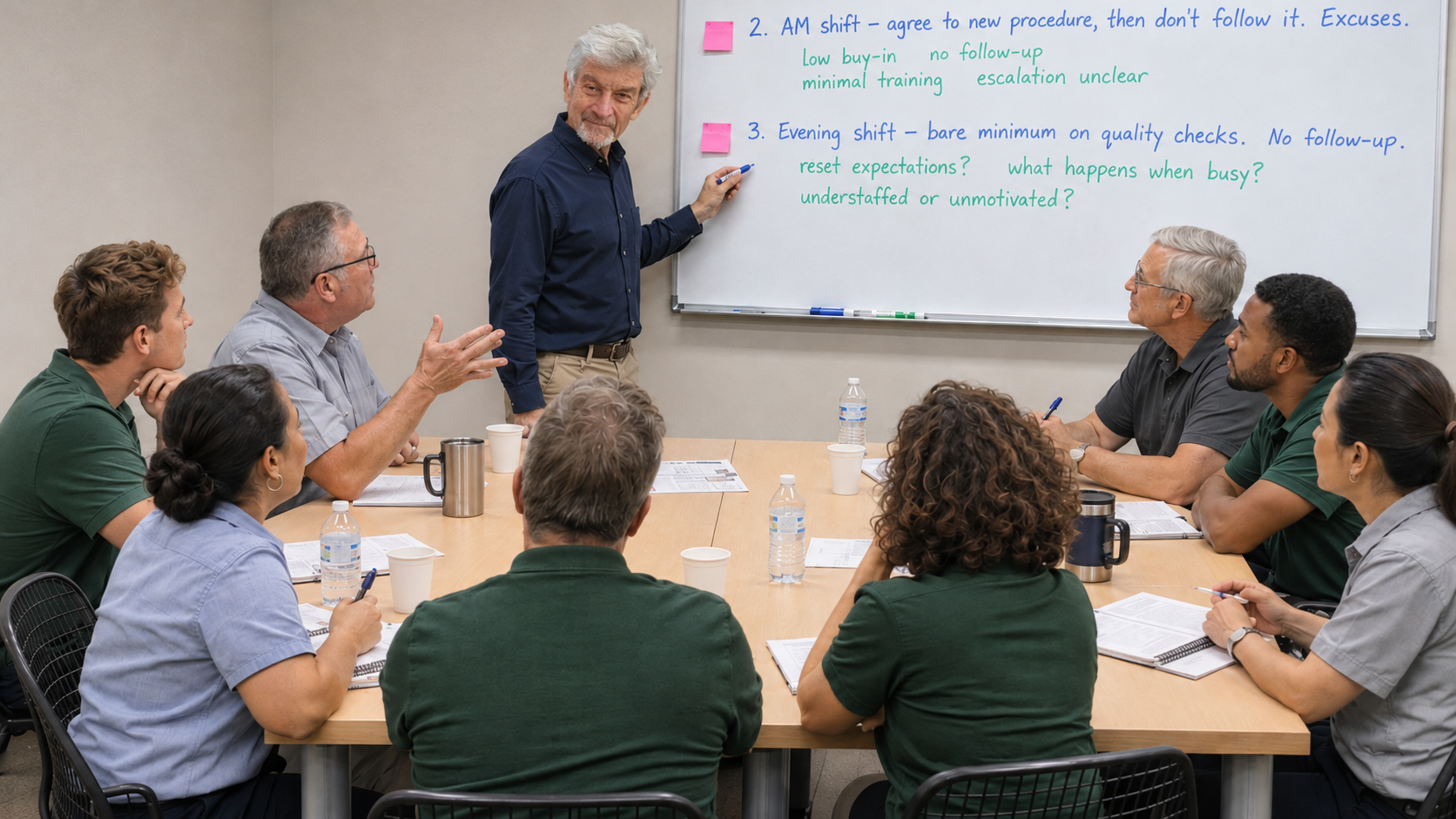
In each session, supervisors work on actual challenges from their plant and plan how to handle them differently. They put those plans into practice on the floor, then return to review what worked, what didn't, and what to do next—with guidance and coaching from Bruce throughout.
"The performance of the plant over the last 3 months has been amazing. Quality has improved significantly, and plant morale has been tremendous."
John B, PLANT MANAGER, BURLINGTON
When people problems keep landing on your desk
Most supervisors are promoted because of technical skills yet most of the problems landing on your desk come from people challenges. Some manufacturing organizations are spending a lot of money on training to help fix this but not seeing the payoff they need. The rest - just don't have time.
John at a plant in Cambridge told me "I'm tired of wasting money on training". He had just sent 3 senior supervisors for a 2-day off-site and got nothing but complaints when they got back. We dug a bit deeper and this is what we found:
- They could not relate to generic role plays
- The pile of "urgent" tasks when they got back took a week to clear
- Lack of confidence prevented them from trying new approaches
Past habits are hard to break and the pressure of returning to work makes this even harder. The research backs John up. Whether training sticks depends less on the content than on what happens afterwards: practising on real situations, support from their manager and peers, and following up on how it went.
My focus for the past 30 years has been supporting the people within the manufacturing industry. On the front line, on the bottom line and in the boardroom.
Supervisor training is always a challenge. Earning the respect of someone with 20 years’ experience requires genuinely speaking their language. It takes time and trust to build a coaching relationship that generates results.
John set the direction and followed up with his supervisors. This is what we did in the sessions:
- All sessions are held at the plant, are 3 hours long and are duplicated for each shift.
- Core skills are delivered in six manageable sessions, each focusing on a specific skill.
- We apply the new tools to current challenges supervisors identify in the room.
- Supervisors work in one group to create specific actions and test them in the room.
- Every plan is evaluated and improved by the group with my help as coach.
- Supervisors leave with specific actions to try out.
- Each participant brings their experiences back to the next session to share.
- We use the learning as the starting point for building the next skill.
The proof was in the results. John has since brought the program to his other plants in Cambridge and repeated it in the following years. We even built a complementary version for front-line leaders.
Let’s let the participants speak for themselves. This is the feedback from John's team from that first session. We had a mix of new supervisors and some with over 20 years’ experience. We can share the full results with you if you are interested so you know this is real.
"Some of my management techniques have done a 180 in how I approach different people and scenarios — results are positive."
"Helps to build a level of trust and communication between management and employees."
"Conversations as a group were great on the topics and lessons provided."
"Opening my eyes to other ways of communicating and understanding employees has made me a more confident and respectful supervisor."
"The discussions on how to deal with confrontational employees and what not to do."
Another quote
— Supervisors from John’s team, after the first program
Could this work in your plant?
If your supervisors are facing the same challenges, let’s talk. In a 20-minute confidential conversation we’ll look at what’s landing on your desk and whether this program fits your plant.
RESEARCH & EXECUTIVE BRIEF
Why Traditional Leadership Training Fails in Manufacturing
Research on workplace training has found the same pattern for decades: much of what supervisors learn in a classroom never makes it back to the floor. Read More
People Skills that Build Plant Performance
Download a PDF
Practical tools for handling tough employee situations, building accountability, and improving team performance.
The modules build on each other. The first three build the supervisor’s relationship with employees. The next two use that relationship to hold people accountable and coach performance. The last brings everything together for one of the hardest situations a supervisor faces: a change employees did not ask for.
Module 1
Achieve results through people
Supervisors replace pushing for compliance with a structured, listen-first approach. They uncover what is actually blocking performance or safety and build the trust needed to motivate and engage employees.
More about Module 1
The challenge: Supervisors are usually promoted for their technical skills. When employees don’t listen, make an effort or do what they’re asked, supervisors tend to fall back on how they were supervised 20 or 30 years ago, and pushing harder only makes things worse.
Supervisors learn to:
- Take a “listen first” approach and ask questions to understand employee concerns
- Find the root cause behind attitude and performance problems
- Build trust and stronger working relationships with employees
Between sessions: Supervisors practise active listening with their employees, note what worked, and report back on what they can improve.
The result: Less time spent on attitude and performance problems, and better outcomes for employees and the work.
Module 2
Adapt your approach to different employees
Supervisors assess their own style and learn how employees differ in how they communicate and problem solve. Adapting their approach reduces daily friction, and improves employee relations and performance.
More about Module 2
The challenge: Supervisors tend to use the same approach with everyone, overlooking the fact that people are different. Employees who feel they aren’t being listened to or valued push back, and friction builds.
Supervisors learn to:
- Recognize different employee communication and work styles
- Adjust their approach to connect with different employees
- Get more cooperation and effort from their team
The result: Practical tools to get more from employees who have frustrated them in the past, and more employees willing to speak up, share ideas and get involved in improving results.
Module 3
Increase employee engagement and contribution
Supervisors learn a step-by-step process to run productive problem-solving discussions with frontline staff. Drawing on operator ideas builds genuine ownership and commitment to improvements.
More about Module 3
[Module 3 detail – add from the program outline]
Module 4
Clear expectations and accountability
Supervisors master a firm and fair process combining non-negotiables with room for employee involvement and support. They learn to enforce standards consistently.
More about Module 4
The challenge: Every supervisor deals with people who don’t do what is required and don’t make the effort. When warnings are never enforced, the message is that poor performance is tolerated. Employees who work hard and follow the rules start to wonder why they bother, and morale, teamwork and performance suffer.
Supervisors learn to:
- Communicate exactly what is expected
- Hold a direct accountability conversation, including the consequences of not meeting expectations
- Make sure employees have the training, tools and coaching they need to do the job
- Document and follow up so consequences are fair and consistent
The result: A clear, repeatable approach from setting expectations to following through. Standards are clear, effort is recognized, and poor performance is no longer ignored.
Module 5
Coach to improve performance
Supervisors learn to tell whether a problem stems from ability or willingness. Using structured coaching, they get to the root of performance issues and secure concrete commitments to change.
More about Module 5
The challenge: When an employee isn’t performing, supervisors tend to either take over and issue threats, or avoid the conflict altogether. Few have ever been taught how to find out why someone is struggling, or how to help them improve.
Supervisors learn to:
- Identify the real reasons behind poor performance
- Get employees to take ownership of their performance and commit to improving
- Provide the right mix of direction, support and follow-through so improvement sticks
In the session, supervisors practise a coaching conversation aimed at improving performance.
The result: Fewer performance problems, less time managing difficult employees, and better effort, teamwork and productivity.
Module 6
Lead employees through change
Supervisors learn to manage employee reactions when procedures, systems and structures change. Instead of demanding compliance, they communicate clearly and ensure employees are ready and able to change.
More about Module 6
The challenge: Experienced employees often push back on change: “Things are working fine” or, more bluntly, “Leave us alone.” Supervisors typically respond with a top-down “you must change” approach, stop listening to concerns, and make resistance worse.
Supervisors learn to:
- Reduce employee anxiety and resistance during change
- Build employees’ willingness to accept and adapt to changes
- Provide the support that makes change easier and less stressful
In the session, supervisors practise change conversations they can use with their own teams.
The result: Employees understand why the change is needed and feel confident the support will help them make the switch to new systems or methods.
WHO LEADS THE SESSIONS
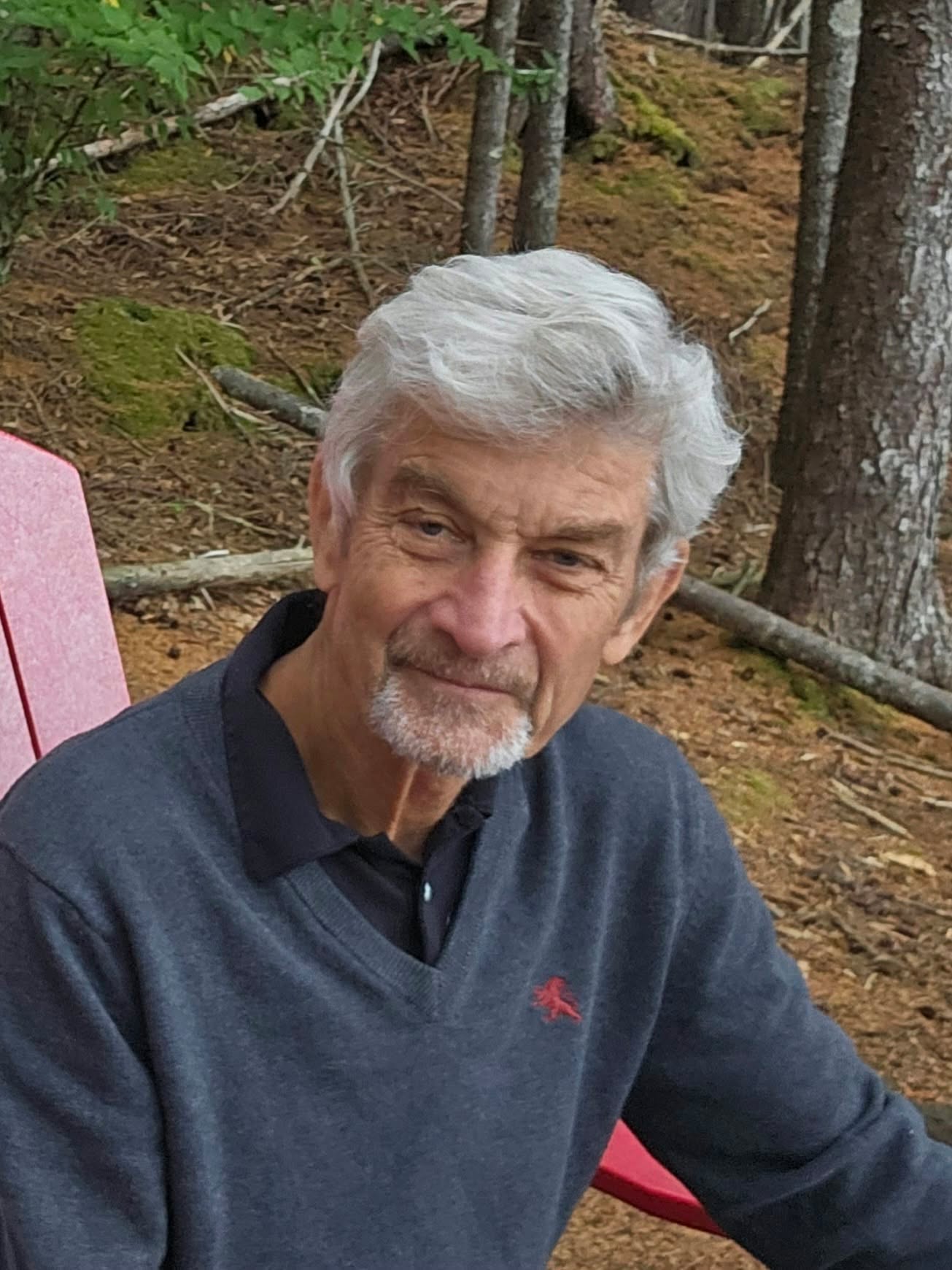
Bruce Craig
Partner and Senior Consultant • Participative Designs Inc.
Bruce personally delivers every on-site supervisor session. He brings over 30 years helping front-line manufacturing leaders resolve communication, employee relations, and performance management issues in plants across Southwestern Ontario and the Greater Toronto Area.
MANUFACTURERS BRUCE HAS WORKED WITH
Canada Brick • Arriscraft • Canadian General Tower • Copper-Weld Canada • Tremco Canada • Wrigley Canada • Shell Canada • Suncor Energy
Let's talk about your plant
Have a 20-minute confidential discussion with Bruce about your current people and performance challenges.
We respect your privacy. No distribution of your plant details to third parties.
Frequently Asked Questions from Plant Leaders
How do we schedule training without hurting production?
The program runs as six half-day sessions, so supervisors are off the floor for a morning or afternoon, not a full day. Sessions can be repeated so every shift is covered.
How often are sessions scheduled?
We recommend two weeks between sessions. If your production schedule needs it, sessions can be spaced three or four weeks apart.
Can lead hands attend?
That’s decided with you when the program is set up. Supervisors often have challenges with their lead hands and need a confidential space to work through them. Many organizations also run separate sessions for lead hands, with the supervisor team deciding what those sessions cover.
Where does the training take place?
Directly at your manufacturing facility in an on-site training room or boardroom. Because Bruce is on-site, we can see your production process, and discuss current floor issues.
What geographic areas do you service?
Participative Designs Inc. is located in Campbellville, Halton Region. Bruce delivers programs across the Greater Toronto Area (GTA), Hamilton, Guelph, Kitchener-Waterloo, Cambridge, London, and Southwestern Ontario.
People Skills for Supervisors
PARTICIPATIVE DESIGNS INC.
On-site people skills training for supervisors in Ontario manufacturing plants.
LOCATION & SERVICE
Serving the GTA and Southwestern Ontario
© 2026 Participative Designs Inc. All rights reserved. Campbellville, Ontario.